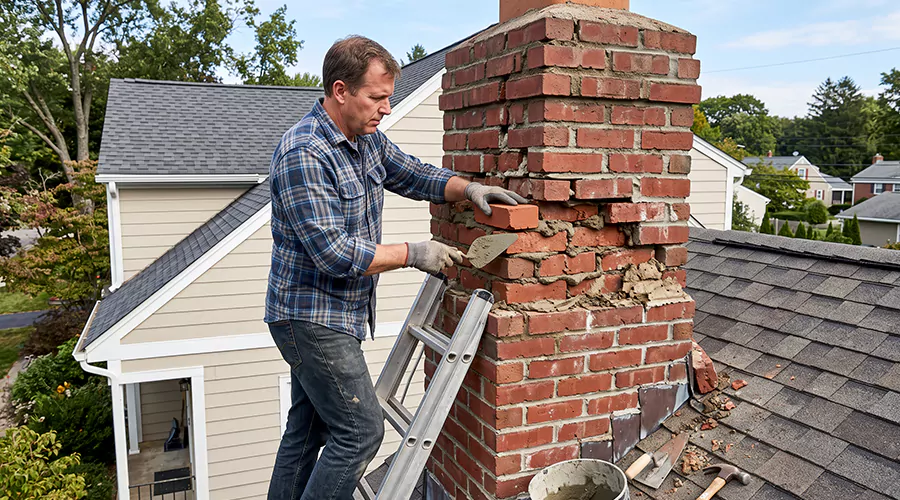
How to Repair Loose Chimney Bricks
Loose bricks mean the mortar holding them has failed. Water, freeze and thaw cycles, and age are common causes. Repairs involve repointing and brick replacement.




Based on 500+ Reviews

Proudly American
Owned & Operated

Loose chimney bricks are a sign that the masonry structure may be deteriorating and should not be ignored. Bricks that become loose can allow water to enter the chimney, weaken the surrounding masonry, and create safety concerns if pieces fall from the chimney structure.
Repairing loose chimney bricks usually involves identifying why the bricks became loose, removing unstable materials, reinstalling or replacing damaged bricks, and correcting the moisture problem that caused the damage.
The correct repair method depends on whether the issue is limited to a few loose bricks or indicates a larger structural problem.
Chimney bricks are held together by mortar joints that provide strength and stability. Over time, these joints can deteriorate and allow bricks to shift or separate.
Common causes of loose chimney bricks include:
Finding the cause is important because replacing loose bricks without fixing the underlying issue may only provide a temporary solution.
Homeowners should watch for signs that indicate chimney brick problems.
Common warning signs include:
Loose bricks should be addressed quickly because they can allow additional damage to develop.
Before repairing loose bricks, the chimney should be inspected carefully.
The inspection should check:
The repair approach depends on the cause.
For example:
Before reinstalling bricks, unstable materials must be removed.
The repair process may involve:
Loose bricks should not simply be covered with mortar because this may hide the problem without creating a strong repair.
The surface must be properly prepared so the replacement materials can bond securely.
Mortar plays an important role in keeping chimney bricks secure.
When mortar deteriorates, bricks may loosen because they no longer have proper support.
Common mortar problems include:
The repair process is known as repointing.
Repointing involves:
Proper repointing helps restore stability and reduce water entry.
If bricks are cracked, broken, or severely deteriorated, they may need replacement.
Brick replacement usually involves:
Replacement bricks should be similar in:
Using the wrong materials can create additional stress within the masonry.
Water is one of the most common reasons chimney bricks become loose.
Before completing repairs, inspect moisture protection components.
Important areas include:
| Component | Possible Issue |
|---|---|
| Chimney crown | Cracks allowing water entry |
| Flashing | Leaks around roof connection |
| Chimney cap | Rain entering from top |
| Masonry surface | Water absorption |
If water continues entering the chimney, new repairs may fail over time.
Loose bricks may return if moisture problems are not corrected.
Common repairs include:
A damaged crown can allow water to enter from the top of the chimney.
Repairs may include:
Damaged flashing can allow water around the chimney base.
Repairs may involve:
Correcting these issues helps protect repaired masonry.
After masonry repairs are completed, waterproofing may help protect the chimney from future moisture damage.
A proper chimney waterproofing treatment can:
Waterproofing should not be applied over damaged masonry. Repairs should be completed first.
Some small repairs may seem possible for homeowners, but chimney masonry work requires proper materials and techniques.
DIY repairs can be challenging because of:
Professional evaluation may be recommended when:
Ignoring loose bricks can lead to larger problems.
Possible consequences include:
A small loose brick problem can become a major chimney repair if left untreated.
The cost depends on:
Common repair factors include:
| Repair Type | Cost Factors |
|---|---|
| Single brick replacement | Number of bricks and access |
| Mortar repair | Amount of damaged joints |
| Repointing | Size of affected area |
| Masonry restoration | Extent of deterioration |
| Structural repair | Severity of damage |
Repairing loose bricks early is usually less expensive than rebuilding damaged chimney sections.
Regular maintenance can help protect chimney masonry.
Helpful steps include:
Preventing moisture damage is one of the best ways to protect chimney bricks.
Loose bricks should be repaired when you notice:
Do not wait until multiple bricks become unstable because the repair may become more complex.
Loose chimney bricks are usually caused by deteriorated mortar, moisture damage, freeze-thaw cycles, aging materials, or structural movement.
Repairing loose bricks involves inspecting the chimney, removing unstable materials, repairing mortar joints, replacing damaged bricks, and addressing the moisture source that caused the problem.
Because loose bricks can allow water intrusion and affect chimney stability, early repairs are important. Regular inspections and proper maintenance help protect chimney masonry and extend the life of the chimney system.
Loose chimney bricks are commonly caused by deteriorated mortar, moisture damage, freeze-thaw cycles, and aging masonry.
Yes. Loose bricks can often be repaired by removing unstable materials, repairing mortar, and reinstalling or replacing damaged bricks.
Yes. Even one loose brick can allow water entry and may indicate a larger masonry problem.
Yes. Moisture can weaken mortar joints and damage bricks over time.
No. Loose bricks can lead to additional damage and may become a safety concern if pieces fall.
Regular inspections, moisture protection, and timely masonry repairs help prevent loose chimney bricks.
Loose bricks mean the mortar holding them has failed. Water, freeze and thaw cycles, and age are common causes. Repairs involve repointing and brick replacement.
